About Nodrius
Nodrius is the result of learning through real systems, experiments and failures.
Who I am
I learn by building, testing and breaking things.
Nodrius grew out of two years of hands-on experimentation across networking, servers and virtualization, cybersecurity governance, automation and AI.
I don't learn technology only by reading about it. I build labs, develop projects, test systems, investigate failures and document what actually happens. The goal is to turn concepts into practical knowledge that can be understood, reproduced and challenged.
AI has become an important part of this process, not as a replacement for understanding, but as an accelerator for research, experimentation and iteration.
Nodrius is the structured result of that process: a place to understand how things work, build them independently, and avoid the mistakes that cost time and money.
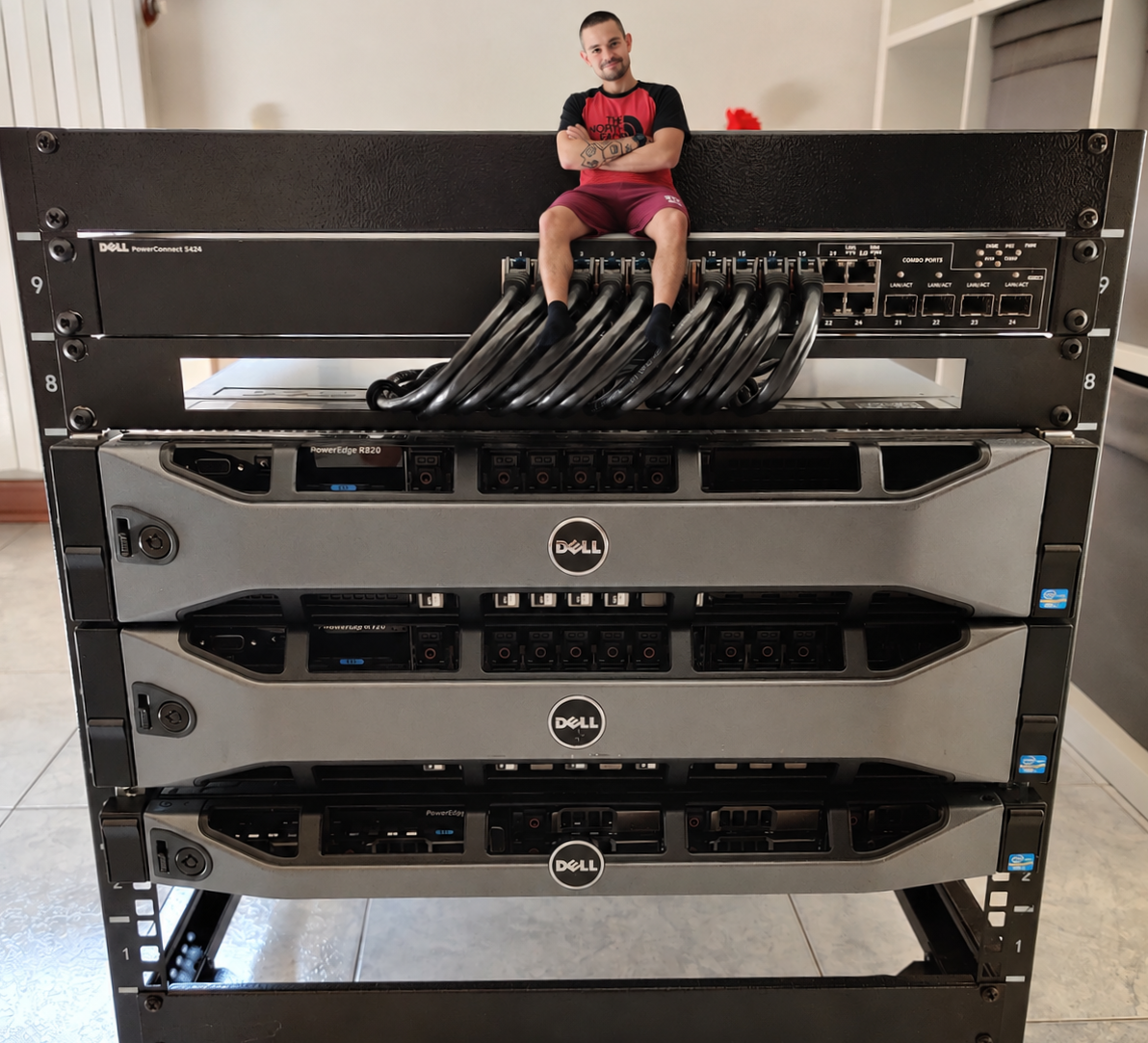
A place to build, test, break, troubleshoot and learn.
What I do
Four areas, explored through practical work, experimentation and structured documentation. They are interconnected: a network problem becomes a server experiment, a server experiment becomes a question of governance, and automating one of them feeds the others.
Protocols, routing, VLANs and network infrastructure.
Virtualization, containers, storage, backup and deployment.
Hardening, monitoring, tooling and good practice.
Scripting, local inference, infrastructure and AI security.
What they have in common is the way they are learned: a real system, a test, an observed result and a written record that someone else can follow.
How I do it
Every entry follows the same cycle, and the cycle is not a straight line: most of the work happens between testing, breaking and troubleshooting.
The laboratory is where ideas meet reality: home-lab environments and real hardware, network and server experiments, development environments, projects, tests, failure analysis, validation and documentation. Nothing is documented as a demo of something already known, and nothing is declared working before it has been observed working.
The lab is not a demonstration of what I already know. It is the environment where I learn what I don't know yet.
The distinction that matters is what the lab is for. A result that only confirms the starting hypothesis is a weak result; what is worth writing down is what was observed, under which conditions, and where it stopped behaving as expected.
Why
AI has dramatically reduced the cost and the time required to explore a technical question. In this workflow it accelerates:
- research
- comparison
- design
- implementation
- troubleshooting
- iteration
- documentation
Acceleration, however, does not remove the need to understand. It makes verification and understanding more important: a model can produce a plausible answer that is simply wrong, and only the system in front of me can tell the difference.
AI is not the replacement for the lab. It is an accelerator for the cycle of exploration.
The goal
The goal is not personal branding and it is not a demonstration of expertise. It is to build a structured body of practical technical knowledge that helps people:
- understand how systems work;
- build and experiment independently;
- avoid mistakes that waste time and money.
Nodrius is not a collection of shortcuts.
It is a structured record of experiments, systems, failures, decisions and technical knowledge.
The goal is not simply to make technology easier. It is to make it understandable enough to build with confidence.